


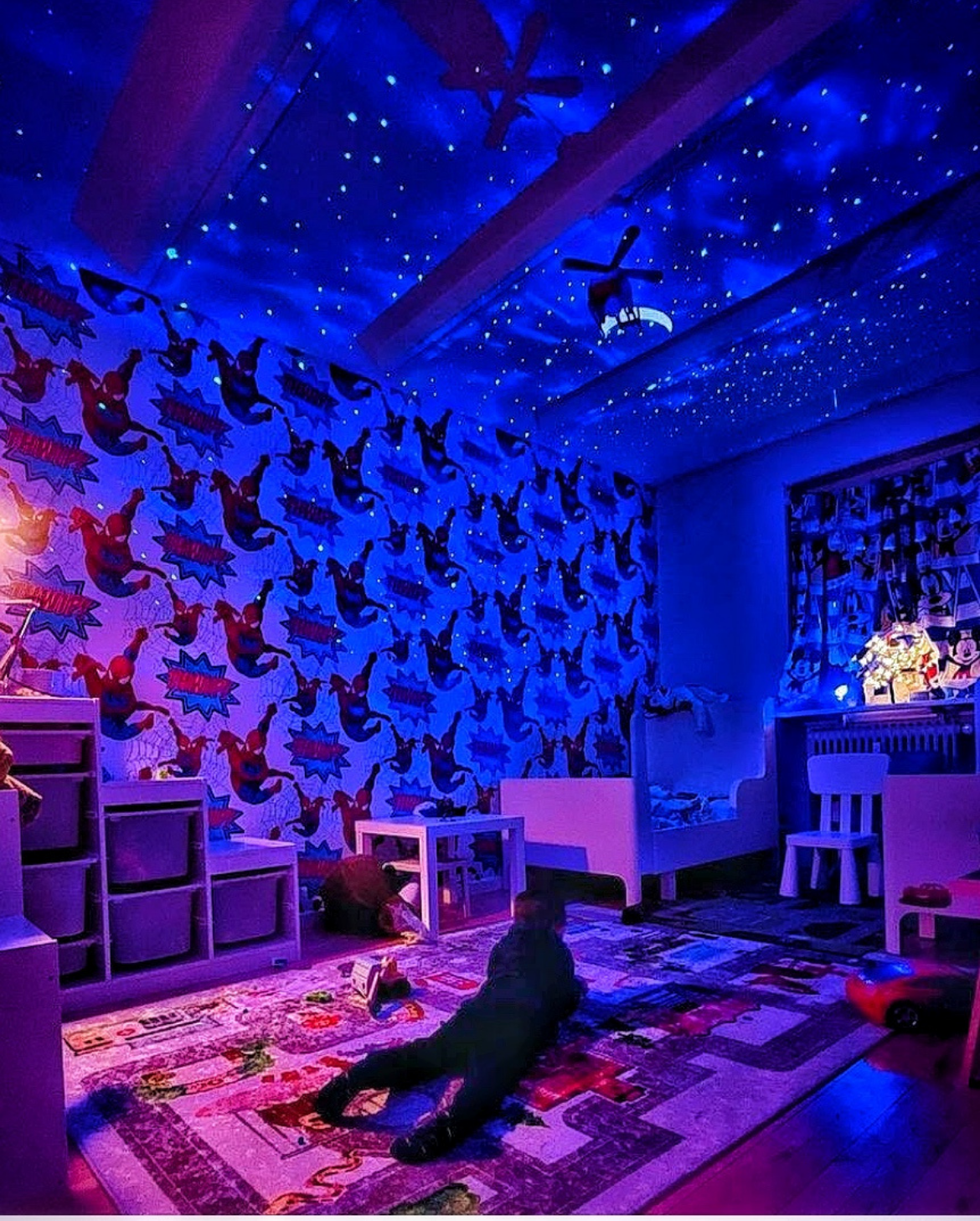
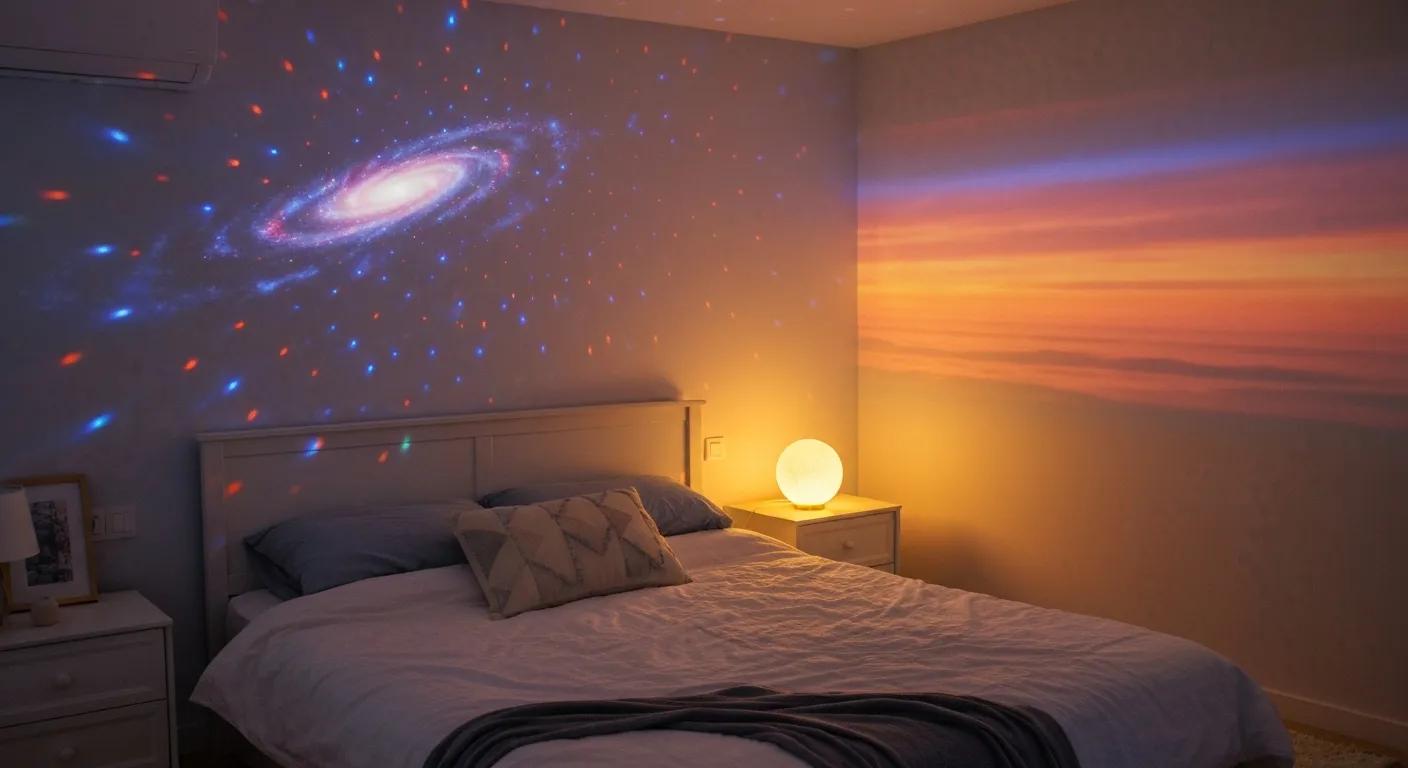
A night room light is a focused source of ambient illumination designed to support activities after dark — from sleep and relaxation to focused study — and the right choice can meaningfully improve sleep quality, concentration and emotional calm. This guide explains how different lamp types, such as galaxy projectors, sunset lamps and moon lamps, affect circadian rhythms and melatonin production, and shows which features to prioritise for distinct use cases in Australian homes. Many Australians seek lighting that reduces blue light exposure at night, supports winding down, or provides soothing sensory input for anxiety relief and NDIS-related needs; this guide maps light spectrum, hardware features and practical placement to those outcomes. Read on for expert insights, concise buying checklists, product-to-use-case comparisons and helpful tips so you can choose a night light that supports sleep, study and relaxation. First, we cover sleep-optimised lights and the science behind red-spectrum benefits, then study and focus on lighting, calming sensory projectors, age-specific recommendations, practical buying criteria, including special offers, and finally, where to buy trusted options with fast delivery across Australia.
What Are the Best Night Lights for Sleep in Australia?
A sleep-optimised night light is one designed to minimise blue wavelengths, offer dimmability and enable consistent evening routines that support melatonin production and circadian alignment. Warm-white and red-spectrum sources reduce melatonin suppression compared with cool or blue-rich lighting, and timers plus low-glare diffusers help users maintain darkness cues while still providing reassurance or soft illumination. Experience shows that exposure to red or amber light in the hour before bed is less disruptive to sleep onset than blue-rich light; practical devices combine spectrum control, timers and low intensity to translate that evidence into nightly benefit. Below, we compare typical sleep-focused product types by feature and mapped sleep benefits to help you match a lamp to your bedroom routine.
Different sleep-oriented lights map predictably to user needs and room setups, so the next subsections explore specific mechanisms and device settings to implement recommended routines.
Before the comparison table, here is an actionable list of core sleep features to prioritise:
- Warm or red spectrum: Light sources under 2,700 K or red-leaning LEDs minimise melatonin suppression.
- Dimmability and timers: Adjustable output and scheduled shutoff support a regular wind-down routine.
- Low glare and soft diffusion: Diffusers and indirect placement reduce sleep-disruptive contrast.
These features translate into real improvements in sleep onset and continuity when used each night consistently.
Different products deliver these benefits through specific features and controls; the table below summarises common sleep-focused night lights and how their attributes support melatonin and sleep latency.
| Product Type | Key Feature(s) | Sleep Benefit |
|---|---|---|
| Galaxy Projector (warm hues) | Colour blending, low-intensity projection | Creates low-level ambient colour without blue peaks; supports relaxed pre-sleep states |
| Red/Amber Bedside Lamp | Dedicated red/amber LEDs, dimmer, timer | Minimises melatonin suppression and helps shorten sleep latency |
| Moon Lamp (warm dimmable) | Warm white with smooth dimming, low glare control | Provides reassuring illumination with controllable intensity for minimal circadian disruption |
This comparison shows how selecting specific features — spectrum, dimming and diffusion — maps directly to improved melatonin support and easier sleep onset.
How Does Red Light Therapy Improve Sleep Quality?

Red light therapy for sleep uses narrow-band red wavelengths to stimulate physiological responses that can support melatonin production and circadian entrainment when used in the evening. The mechanism centres on reduced stimulation of intrinsically photosensitive retinal ganglion cells that are most responsive to blue light; by delivering low-energy red light instead, devices avoid suppressing melatonin while still providing visible illumination. Many users find that moderate evening red-light exposure can reduce sleep latency and improve subjective sleep quality for some users when applied consistently for several weeks. Practical recommendations are simple: use low-intensity red or amber lighting for 30–60 minutes before planned sleep, position sources for indirect illumination, and combine with a consistent pre-sleep routine for the strongest effect.
Understanding red light’s mechanism leads to the next practical question: which device settings and features reliably preserve melatonin while offering useful illumination?
Which Night Lights Promote Melatonin Production and Circadian Rhythm?
Night lights that promote melatonin-friendly environments share three practical controls: warm/red colour options, low lumen output with progressive dimming, and scheduling features to automate evening transitions. Colour temperature guidance for melatonin support favours <2,700 K or explicit red/amber modes, while brightness under 50 lux at eye level is usually sufficient for reassurance without circadian disruption. Timers or smart scheduling let users phase lights down over 15–30 minutes, enabling the brain to associate diminishing light with sleep onset and strengthening circadian cues. Pairing these device settings with behavioural steps — limiting screens, avoiding bright overheads and maintaining a fixed bedtime — makes equipment benefits more reliable for long-term sleep improvements.
These device-level guidelines also inform the best choices for concentrated tasks like studying, which we explore next.
How Can Night Room Lights Enhance Study and Concentration?

Task-optimised night lights for study are designed to provide high-quality, glare-controlled illumination at the right colour temperatures and lux levels to reduce eye strain and sustain focus during evening work. The principle is simple: use cooler, higher-CCT lighting for active cognition and task clarity, then switch to warmer settings for breaks or wind-downs, balancing ambient mood lighting with direct task lighting to reduce visual fatigue. Features to prioritise include adjustable colour temperature, flicker-free LEDs with high CRI, and focused beam control or diffusers that eliminate contrast glare. Below, we provide an attribute-to-outcome table and a short checklist to help set up a study area that supports concentration without disrupting later sleep.
Task lamps with high CRI, adjustable Kelvin range and anti-glare diffusers promote comfortable, sustained study by delivering steady, accurate light that preserves visual acuity.
Intro to the EAV comparison table showing product type attributes mapped to study outcomes:
| Product Type | Attribute (brightness, CCT, glare control) | Study Outcome |
|---|---|---|
| Adjustable Desk Lamp | 4000–5000 K, 400–800 lux, glare diffuser | Accurate colour rendering and reduced eye strain for task work |
| Task Light with Arm | Focused beam, flicker-free LEDs, adjustable height | Maintains consistent illumination across pages/screens for longer focus |
| Ambient + Task Combo | Dimmable ambient + bright task zone | Lowers contrast and visual fatigue while supporting concentration transitions |
This table clarifies how lamp attributes produce tangible study benefits and helps prioritise features when choosing a study light.
To help readers put these recommendations into practice, use the following checklist of optimal study lighting settings:
- Colour temperature 4000–5000 K for active work to support alertness and colour accuracy.
- Task illuminance 400–800 lux on the work surface while ambient remains softer to reduce contrast.
- Flicker-free, high-CRI LEDs and adjustable positioning to minimise eye strain and maintain posture.
These actionable settings let you tailor a study environment that supports both performance and visual comfort.
What Are the Optimal Light Colours and Brightness for Study Rooms?
Optimal study illumination uses a cooler colour temperature and higher localised lux levels than sleep lighting, because blue-depleted light reduces alertness. Practical numeric guidance recommends 4,000–5,000 K for evening study tasks and 400–800 lux at the desk surface to support reading and screen work without excessive glare. Position lights to avoid direct beams into the eyes and use diffusers or reflectors to spread illumination evenly, which lowers contrast and reduces eye strain over multi-hour sessions. This brightness and colour balance can be toggled down after study to warmer modes to protect later sleep stages.
Setting these parameters appropriately enables a swift transition from focus to wind-down and supports healthier evening routines.
Which Features Make Study Lamps Ideal for Focus and Reduced Eye Strain?
Study lamps should prioritise high colour rendering (CRI 90+), flicker-free drivers and versatile adjustment to reduce visual fatigue and maintain posture during long sessions. High CRI improves colour fidelity for reading and visual tasks, while constant-current drivers and proper heat management eliminate perceptible flicker that contributes to headaches and eye discomfort. Adjustable arms, tilt and brightness controls let users place light where needed, while compatibility with task-specific colour temperatures ensures the lamp can be repurposed for relaxation later in the evening. Prioritising these features reduces the risk of eye strain and creates a flexible solution for mixed-use bedrooms or study nooks.
Good study-lamp choices support productivity and make the evening shift back to sleep-friendly lighting much easier.
What Types of Calming Night Lights Support Relaxation and Anxiety Relief?
Calming night lights include galaxy projectors, sunset lamps and sensory projectors that use slow motion, warm hues and controllable tempo to lower arousal and facilitate mindfulness. These devices create an ambient environment that cues relaxation by using gentle motion, low-frequency colour transitions and sound-compatible settings, which together reduce sympathetic nervous activity and encourage diaphragmatic breathing. For anxiety relief, features like soft motion, low-contrast palettes and gradual speed reduction are most effective; pairing projection with breathing or guided meditation routines amplifies the calming effect. The next paragraphs describe how these devices work in practice and then introduce product examples aligned to relaxation use-cases.
After that prompt, concise device callouts provide practical solutions that readers can consider: galaxy projectors create immersive starfields and auroras to support relaxation, sunset lamps cast warm gradients ideal for meditation, and moon lamps offer a stable, warm glow for bedside reassurance.
How Do Galaxy Projectors and Sunset Lamps Create a Serene Atmosphere?
Galaxy projectors blend projected starfields, nebula textures and slow-moving gradients to shift visual attention away from rumination toward a calming external focus, lowering physiological arousal. Sunset lamps recreate warm horizons through layered amber-to-red gradients, which mimic evening skylight and reinforce cues that signal the body to prepare for sleep. Recommended settings for relaxation are slow pattern speed, low intensity and warm-dominant colour schemes; placing projectors on a dresser or ceiling ensures large-area coverage without direct glare. Combining these visual effects with soft ambient sound or breathing exercises enhances the relaxation response and helps users anchor a consistent wind-down routine.
Understanding these mechanics helps choose devices and placement that amplify relaxation without overstimulating the senses.
What Sensory Lighting Options Help with Mindfulness and Stress Reduction?
Sensory lighting that supports mindfulness typically emphasises tempo control, gentle pattern motion and warm tone balance to reduce sympathetic activation and promote sustained attention to breath or sensation. Devices with adjustable pattern speed let users start with slightly faster motion during transition and slow down to a near-static wash for meditation, while low-intensity warm colours reduce cortical activation linked to stress. For sensitive users, the choice of non-flickering LEDs, low heat operation and simple controls ensures safety and lowers sensory overload risk. Combining sensory lighting with consistent breathing cues or short guided exercises increases the likelihood of lasting stress reduction.
These practical design elements guide selection for accessible mindfulness and therapeutic lighting routines.
Which Night Lights Are Best for Adults and Kids in Australia?
Adults and children often need different feature sets: adults benefit most from spectrum control, dimmability and scheduling for sleep hygiene, while children gain reassurance from soft patterns, simple controls and safety features. For adults, prioritise adjustable colour temperature, timers and smart scheduling to align lighting with circadian needs and routines; portability and multi-function devices that combine sound or projection are useful for travel or multi-room use. For children, look for low-heat LEDs, robust housings, intuitive one-button timers and soothing, non-strobing patterns to support bedtime rituals. The following comparison clarifies these differing priorities so caregivers can match devices to family needs.
These distinctions inform a safe and functional choice for each age group and set the stage for specific feature recommendations in the subsections below.
What Features Should Adults Look for in Night Lights for Sleep and Relaxation?
Adults should prioritise dimmability, warm/red spectrum options and reliable timers or smart schedules to align evening light exposure with circadian goals. Dimmability supports gradual reduction of environmental light that cues melatonin release, while warm or dedicated red modes reduce blue-light effects on sleep physiology. Smart controls that allow nightly scheduling remove friction and improve adherence to sleep routines, and multi-function units with sound or gentle projection can replace multiple devices for compact bedrooms. Portability and USB power options add convenience for travel or bedside re-positioning.
These adult-focused features help integrate night lights into consistent sleep hygiene practices that reinforce longer-term circadian health.
How Do Kids’ Night Lights Support Sleep and Comfort?
Children’s night lights work best when they combine low-intensity illumination, calming visuals and simple timers that parents can set and forget to support predictable bedtime routines. Gentle projection patterns or warm glow lamps provide reassurance without creating bright, attention-grabbing stimuli that delay sleep onset, while child-safe materials and low-heat LEDs reduce physical risk. Ease-of-use through single-button functions or auto-off timers lets caregivers quickly establish a comforting environment and minimises disruption during nighttime checks. These practical attributes make night lights effective tools for helping children transition to independent sleep while maintaining safety and calm.
Selecting appropriately featured devices reduces bedtime resistance and supports healthier sleep habits in children.
What Should You Consider When Buying the Best Night Room Light in Australia?
When buying a night room light, prioritise a short checklist: dimmability, colour temperature control, safety standards, power options and whether the device supports scheduled routines or app control. Dimmability and colour temperature affect sleep outcomes directly, while safety (low-heat LEDs, child-safe housing) ensures reliable use in bedrooms. Consider power source preferences — plug-in versus rechargeable — and whether portability or integration with smart-home schedules is important to you. For a truly confident purchase, consider shipping speed, the ability to try products at home, and any approvals relevant to sensory or therapeutic use. For example, some Australian suppliers offer fast delivery and generous trial periods that make choosing the right device for sleep or anxiety much easier.
Galactic Night Co., operating from Bilambil Heights, NSW, is dedicated to your satisfaction, offering benefits such as FREE 2-8 Day Delivery Australia Wide and a generous satisfaction period. We also position certain products for NDIS-approved anxiety-relief use — these features provide peace of mind when choosing your ideal lighting solution.
The following checklist breaks down must-have versus nice-to-have attributes to guide purchase decisions.
- Must-have: Dimmability and warm/red modes to protect melatonin and enable wind-down.
- Should-have: Timer/scheduling and low-glare diffusion to automate and reduce contrast.
- Nice-to-have: Smart app control, portability and multi-function features for flexibility across rooms.
These priorities help buyers balance immediate needs against longer-term usability and convenience.
How Important Are Dimmability, Colour Temperature, and Smart Features?
Dimmability ranks as a must-have because gradual reduction of light intensity is foundational to sleep onset, enabling behavioural association between dimming and bedtime. Colour temperature determines the spectral content the eyes receive; selecting <2,700 K or dedicated red settings minimises blue light interference with melatonin production. Smart features like scheduling and preset scenes are valuable for adherence, letting users automate a nightly phase-down and removing friction from maintaining a routine. In purchase terms, treat dimmability and warm-spectrum modes as primary criteria, with smart functions and advanced integrations as secondary enhancements that boost convenience and long-term use.
Prioritising these attributes ensures the device supports both the biological and behavioural aspects of good sleep hygiene.
Why Choose Australian Brands Like Galactic Night Co. for Night Lights?
Choosing a local Australian supplier offers practical advantages in shipping speed, local returns and customer support that reduce friction and allow faster at-home testing of night-light benefits. Galactic Night Co., based in Bilambil Heights, NSW, highlights value propositions relevant to buyers: FREE 2-8 Day Delivery Australia Wide and a generous satisfaction period that lets customers trial lights in their sleep environment without extended waiting or immediate purchase anxiety. The company also promotes certain galaxy projectors as NDIS-approved for anxiety-relief applications, which may assist caregivers in evaluating sensory supports. Local warranty handling and faster logistics often simplify exchanges and allow quicker validation of whether a specific light supports an individual’s sleep or therapy goals.
These local trust signals can be particularly important when testing sensory or sleep-oriented lighting in real home contexts.
Where Can You Find Trusted Night Lights with Fast Delivery Across Australia?
Finding trusted night lights involves checking shipping windows, our satisfaction and trial policies, and clear product feature descriptions so you can validate sleep or sensory benefits quickly at home. Fast delivery reduces the time needed to test a device in your usual sleep environment, while generous trial windows and clear return processes make it easier to assess whether a lamp truly enhances your sleep or reduces anxiety. Look for sellers that publish delivery timeframes, satisfaction terms and any mention of therapeutic approvals relevant to sensory use — these trust signals materially reduce purchase risk. The table below summarises offer conditions and shopper value to make comparison straightforward.
| Offer | Condition | Shopper Value |
|---|---|---|
| Free 2–8 day delivery | Nationwide fast shipping window | Quicker at-home testing and lower waiting costs |
| Generous Satisfaction Period | Extended trial/returns period | Allows thorough evaluation of sleep benefits before committing |
| NDIS-approval mention | Therapeutic application for anxiety relief | Supports eligibility or documentation needs for some buyers |
This table clarifies how our offers translate into reduced risk and faster validation of product benefits in real homes.
What Are the Benefits of Free and Fast Shipping for Night Light Purchases?
Free and fast shipping accelerates the at-home evaluation process, letting users test lighting effects in their actual bedroom context within days rather than weeks. Faster delivery allows quicker iteration — you can assess spectrum, placement and timer settings in situ and return or exchange if the device fails to meet sleep or sensory goals. Local shipping also simplifies returns and reduces carriage costs, improving the economics of trial-and-error purchases when testing devices for sleep or anxiety relief. When comparing vendors, confirm both delivery windows and return handling to ensure the trial period aligns with your sleep-evaluation needs.
Quicker logistics, therefore, materially improve the buyer’s ability to determine whether a night light is a long-term solution for their household.
How Does the Generous Satisfaction Period Enhance Customer Confidence?
Our generous satisfaction period gives shoppers extended time to test a night light across multiple sleep cycles and routines, which is essential because many sleep and anxiety benefits emerge only after consistent nightly use. This extended window lets buyers experiment with placement, timing and device modes, and observe changes in sleep latency or anxiety indicators over a realistic timeframe. Importantly, consumers should read the terms and confirm return conditions, but when clearly implemented, this commitment significantly reduces any perceived risk and encourages you to try devices intended to support your sleep or sensory therapy. Example scenarios include testing a galaxy projector’s calming effect over several weeks or validating a red-mode lamp’s influence on sleep onset in the user’s actual bedroom.
- Verify delivery windows and our easy return process before purchase to ensure you can test the device promptly.
- Use the trial period to test multiple settings and placements across several nights for reliable comparison.
- Document changes in sleep onset or anxiety levels to make informed return or keep decisions based on evidence.
These practical steps help shoppers make the most of fast delivery and extended trial offers when choosing night lights.
